The financial wellness workshop that changes behaviour, not just knowledge.
A half-day session for your team on the avoidance that sits between knowing about money and acting on it. Every participant leaves with one concrete next step, a 30-day practice, and the app, so the change holds long after the session ends.

What avoidance costs, before anyone does anything about it.
Financial stress isn't a soft cost. The Financial Consumer Agency of Canada (FCAC) pegs the distraction alone at roughly $1,000 per employee a year, and calls that conservative. Nationally it runs to tens of billions in lost productivity.
And it lands hardest on your under-40s, the group most workplace money programs aren't built for.
Most financial workshops hand out information. Information was never the problem.
There are good, free financial literacy workshops in Canada. If your people need to know how an RRSP works, book one of those. But here's what the research keeps finding:
Four movements, half a day.
Who runs it.

Majid Behboudi
Has built digital products for years, and spent most of them quietly avoiding his own banking app. He built FUC Money on a simple hunch: that the scariest number is the one you keep not looking at, and that facing it should feel like a nudge from a friend, not a spreadsheet.

Gloria Chik
A growth marketer and mixed-media entrepreneur with 15+ years from Toronto to New York, working at the intersection of culture, tech, and storytelling. Now she's aiming all of it at the thing everyone avoids: how we actually feel about money.
We're educators, not licensed financial advisors, and that's deliberate. We don't sell products, we don't take commissions, we don't touch anyone's accounts, and we never see a balance. Nobody in the room discloses anything to anyone. That's what makes it safe enough for people to actually look.
What this looks like for you.
Your under-40s are carrying the productivity cost and getting the least relevant support. Most workplace financial content is retirement-shaped, which lands for the people who need it least.
What changes: people stop avoiding. The practice is ten seconds a day, so it survives contact with a real week.
Best fit: teams of 15–60. Wellness, benefits, or L&D budget.
You already have Each One, Teach One for community literacy, and it's good at what it does. What it isn't built for is the 25-to-35 member who stopped opening your app eighteen months ago and feels too behind to come back.
What changes: a session your members actually want to attend, that mentions no products and sells nothing, sponsored by you.
Best fit: member engagement, community impact, or marketing budget.
Why it's clean: we're product-neutral by design. No advice, no lending, no referrals. Nothing for compliance to unpick.
We'll say the awkward part first: "enough over more" reads differently when someone genuinely doesn't have enough. We adapt the session for that. The exercise becomes looking without shame at a hard number, not finding a number where you'd feel comfortable.
What changes: participants leave with a practice, not a budget they'll abandon.
Best fit: grant-funded programming. Ask us about the community rate.
Money anxiety arrives before the first salary does. Student-facing sessions run shorter and skip the workplace framing entirely.
What changes: students build the habit of looking before there's much to look at, which is the easiest time to build it.
Best fit: student life, wellness, or orientation programming.
What your team keeps, long after the session.
The session is the start, not the finish. Everyone leaves with the material to keep the practice going, so the change compounds instead of fading by Friday.
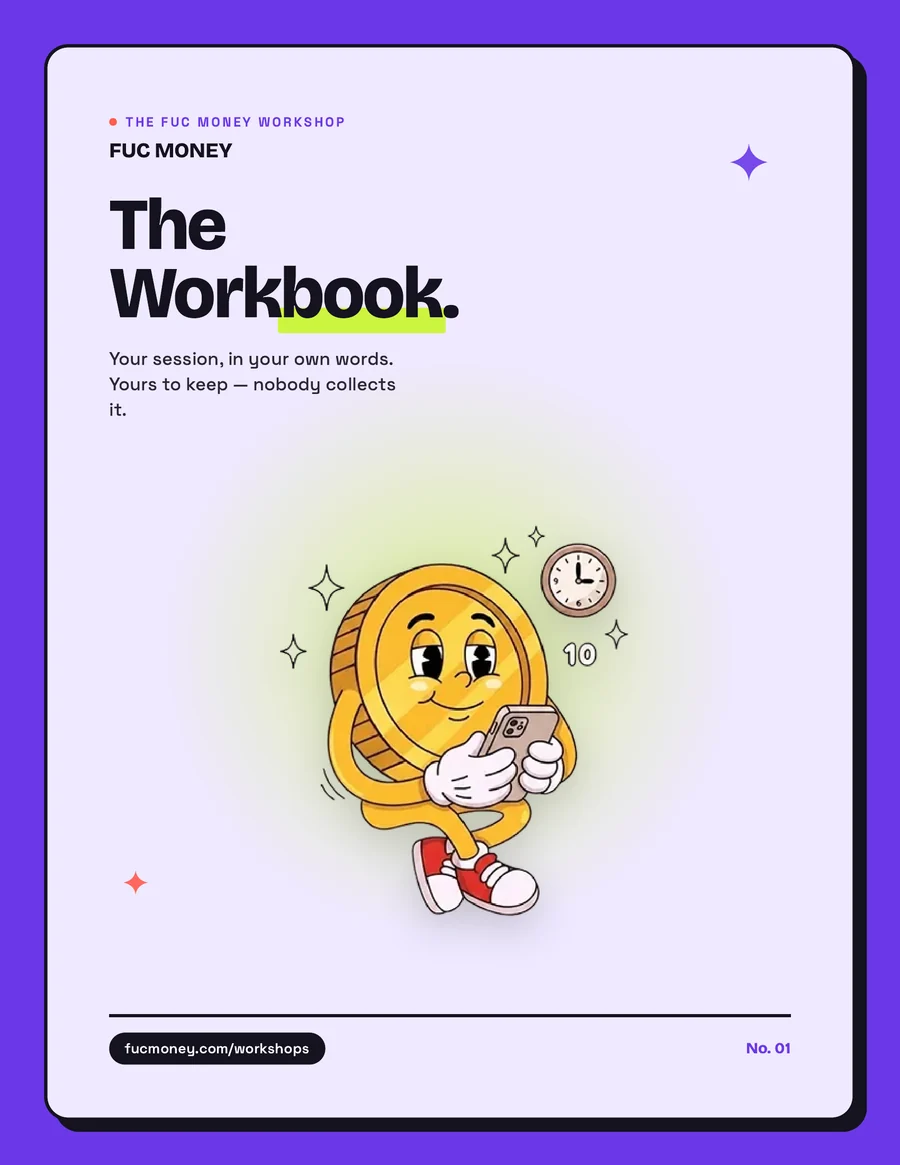
The workbook
Each person's own reflections and next step, theirs to keep.
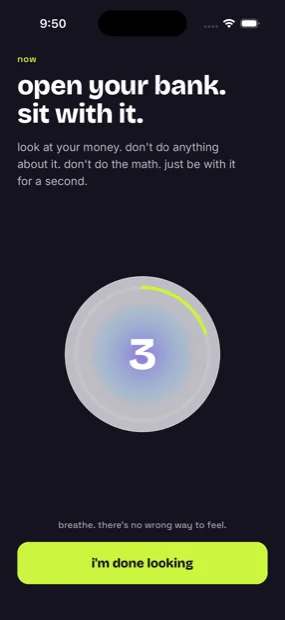
The app
The daily 10-second check-in. Free, private, no account or bank linking.
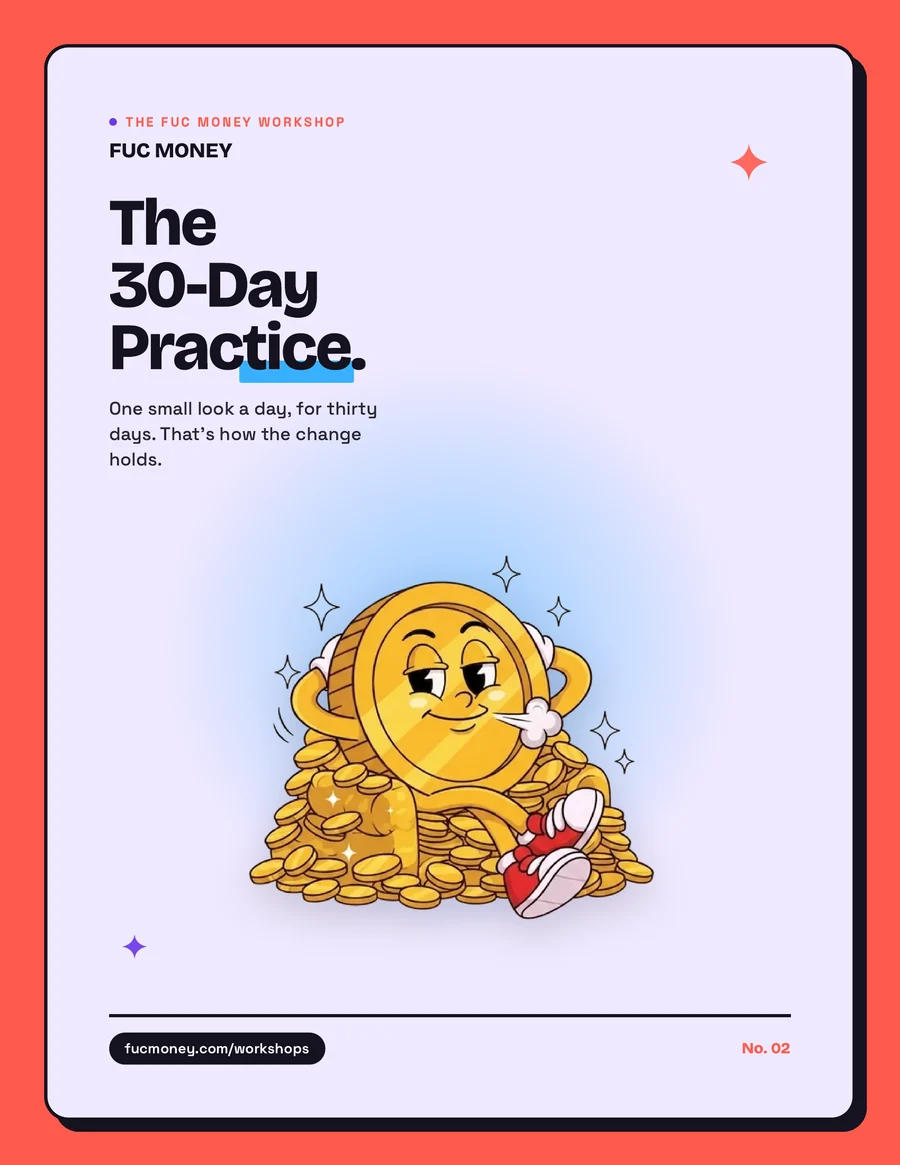
The 30-day practice
A structured 30-day plan that turns the session into a lasting habit.
The practical bits.
- FormatIn person in the Greater Toronto Area or wherever you are — we travel — or remote anywhere.
- LengthHalf day standard. 90-minute lunch-and-learn version available.
- Group size15 to 60. Above 60 it stops being a workshop.
- Lead timeThree weeks.
- IncludedFacilitation, workbooks for every participant, app access, and the 30-day practice.
- InvestmentPriced to the organization, typically $5,000–$8,000 for a half day. We're offering a reduced rate to a few early clients in exchange for candid feedback and a testimonial — tell us if you want one.
Questions people actually ask.
No. Nothing is disclosed to the group or to the employer. Participants look at their own screens, privately, and we only ever discuss how it felt. No individual data reaches anyone, ever.
No, and it can't be. We're educators, not licensed advisors. We don't recommend products, accounts, or actions with your money. If someone in the room needs licensed advice, we'll say so and point them somewhere real.
Those cover information: how compound interest works, what an RRSP is. Genuinely useful, genuinely free, and we'll help you find one. We do a different job: the avoidance that stops people acting on information they already have. Some clients run both.
No. We don't integrate with anything and we never see a number belonging to anyone.
Then we'd tell you honestly that we're not the strongest fit, and probably point you at a retirement-focused provider. Our work is sharpest with people between roughly 22 and 40.
Yes. The method comes from the app, which is live and used every day, and we've taken the session into the room and shaped it there. You get the founders delivering it in person, not a script read off a slide. We're also offering a reduced rate to a few early clients right now, in exchange for candid feedback and a testimonial.
Tell us about your team and what they're navigating.
We'll tailor the session to it, or tell you honestly if we're not the right fit. Either way, you'll get a straight answer, and we'd be glad to build this with you.
In the meantime, the app is live and free, so your team can start the daily check-in today, and the one-pager has everything you'd want to forward internally.